
Modernizing Aging Workshop Cranes: A Practical Retrofit Breakdown from Heavy Contactor Relays to Smooth Inverter VFD Control
Executive Summary: Thousands of heavy manufacturing plants, machine shops, and foundries operate 10-to-25-year-old overhead bridge cranes with structurally sound main girders, but plagued by obsolete contactor-relay controls, aggressive load swinging, and frequent electrical downtime. Completely replacing an overhead crane requires extensive plant shutdown and capital expense. A complete electrical & mechanical modernization retrofit restores smooth millimeter positioning, slashes energy consumption by up to 35%, and extends operational life by 15+ years—at just 20% to 30% the cost of a new crane.
1. The Problem with Legacy Direct-on-Line (DOL) and Contactor Cranes
Legacy cranes built prior to modern Variable Frequency Drive (VFD) standards rely on heavy AC contactors, wound-rotor motors, and large banks of wire-wound resistors to step through fixed speed stages (usually 2 or 3 speeds).
In daily plant operations, this creates chronic pain points:
- Violent Jerking and Pendulum Load Swing: Instantaneous torque shock during acceleration stresses the gearbox teeth and causes heavy suspended loads to swing uncontrollably, creating severe safety hazards for ground operators.
- High Electrical Maintenance Costs: High-amperage contactors arc and weld closed, requiring frequent contact tip replacement and motor rewinds caused by thermal inrush spikes.
- Rough Positioning for Precision Assembly: Inching or “jogging” the crane to align heavy machining fixtures or stamping dies requires repeatedly tapping pushbuttons, which rapidly wears out mechanical brake linings.
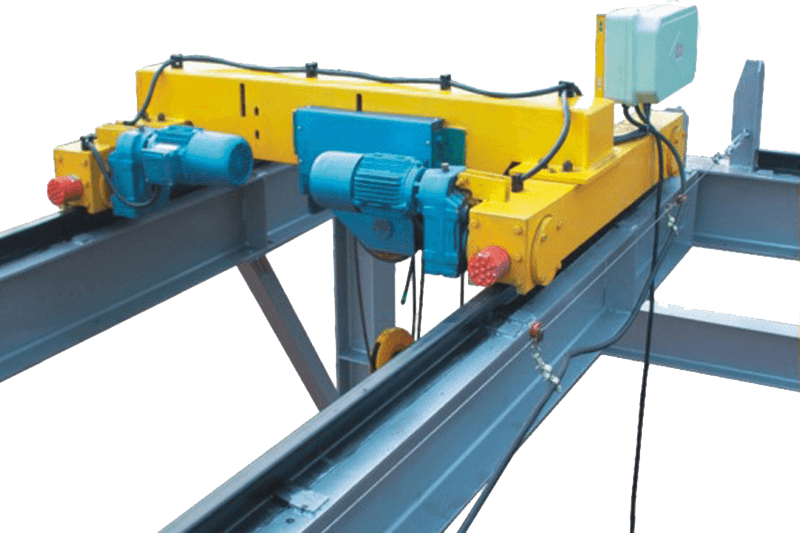
Figure 1: High-performance low-headroom hoist trolley engineered by KCICRANES featuring integrated inverter drives and compact hardened-face gearing.
2. Complete Retrofit Engineering Workflow
Before rewiring cabinets or replacing motors, our field modernization engineers execute a disciplined 4-stage engineering assessment:
| Retrofit Phase | Engineering Scope of Work | Key Components Upgraded | Expected Performance Outcome |
|---|---|---|---|
| Phase 1: Structural Life Audit | Ultrasonic thickness testing (UT), weld NDT on tension flanges, and laser mid-span camber check per ISO 4301. | Main box girders, end carriages, diagonal cross-braces | Validates remaining structural fatigue life (> 15 years certified) |
| Phase 2: Inverter VFD Upgrade | Remove resistor banks and contactor panels; install closed-loop vector VFD control panel with dynamic braking resistors. | IP55 control cabinet, VFDs (Schneider/ABB/Inovance), braking units | Stepless 1:10 speed regulation, 3.5s soft acceleration, zero load swing |
| Phase 3: Drive & Wheel Check | Inspect gear teeth backlash, convert to direct-mount 3-in-1 geared motors, and replace worn wheels with 42CrMo forged wheels. | Geared motors, forged wheel assemblies, splined drive shafts | Eliminates open-gear oil leaks, reduces mechanical vibration by 70% |
| Phase 4: Safety & Control | Install dual industrial wireless radio remotes, overload limiters with LED displays, and optical anti-collision sensors. | Radio remotes, digital load cells, infrared distance sensors | Enables single-operator control from floor; eliminates crane cab hazards |
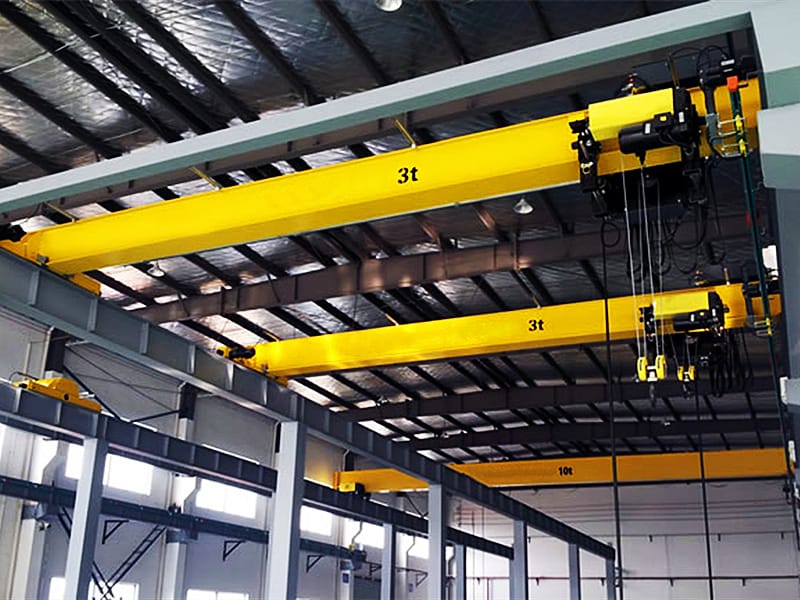
Figure 2: Active manufacturing bay undergoing scheduled staged modernization of multiple overhead bridge cranes without halting facility throughput.
3. Upgrading to Inverter VFD Control: Technical Highlights
Modernizing the electrical heart of an overhead crane involves replacing bulky resistor banks with state-of-the-art Variable Frequency Drives:
A. Hoisting Vector Control with Brake Slip Protection
Hoisting motion requires specialized heavy-duty vector VFDs capable of delivering 200% rated torque at zero speed. During lifting, the VFD pre-magnetizes the motor and builds holding torque before signaling the mechanical electro-hydraulic thruster brake to release. This prevents the dangerous “micro-drop” often seen on older contactor cranes.
B. Smooth S-Curve Anti-Sway Acceleration
For bridge and trolley long-travel motions, the VFD applies an S-curve acceleration ramp ($0 \rightarrow 100\%$ speed over 3.0 to 4.5 seconds). This eliminates abrupt jerk, stabilizes the suspended load center of gravity, and enables precision positioning down to ±1.0 mm without requiring skilled operator counter-inching.

Figure 3: Modernized overhead crane in active heavy fabrication service, delivering smooth millimeter precision handling.
4. Replacing Outdated Hoists with Modern Low-Headroom Modular Units
When traditional wire rope hoists reach their design fatigue limit, swapping them for a modern European-style electric wire rope hoist yields immediate spatial and productivity dividends:
- Gaining 200mm to 500mm of Hook Lift Height: Low-headroom compact trolley frames wrap around the main girder, maximizing usable hook path inside existing low-roof buildings.
- Maintenance-Free Sealed Gearboxes: Splash-lubricated hardened helical gears eliminate messy oil top-ups and reduce operating noise below 70 dB(A).
- Hardened Rope Drum & Guide: Ductile iron rope guides prevent rope overlapping, extending crane wire rope lifespan by 2x to 3x.
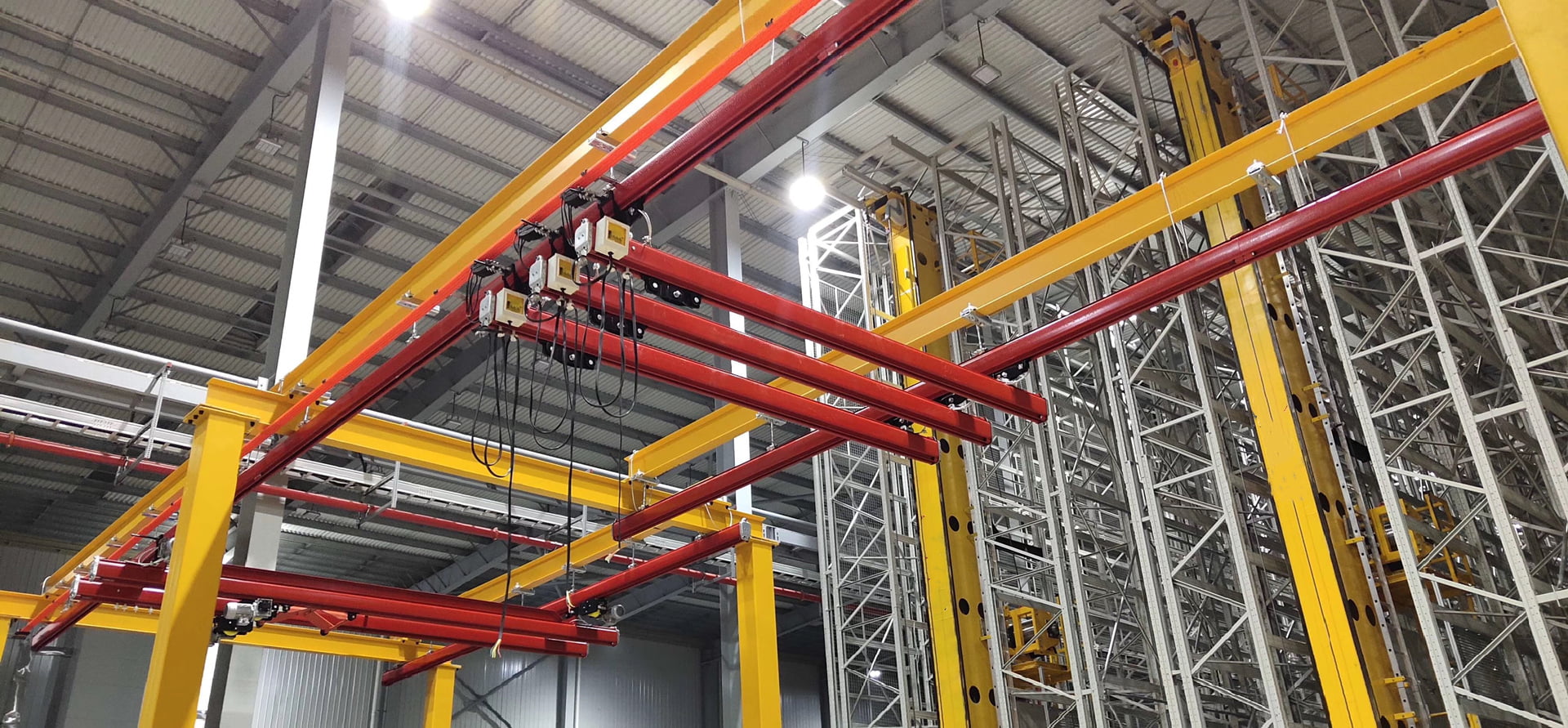
Figure 4: Complete workshop integration combining modernized overhead bridge cranes with agile workstation lifting systems.
5. Economic Breakdown: Retrofit vs. Complete Crane Replacement
| Comparison Dimension | Full Crane Replacement | KCICRANES Modernization Retrofit |
|---|---|---|
| Capital Investment | 100% (High CapEx • \$40k–\$150k+ per crane) | 20% to 35% of new equipment cost |
| Production Downtime | 2 to 4 weeks (dismantling, civil checks, crane installation) | 2 to 4 days (can be performed during scheduled weekend shutdowns) |
| Building Modification | May require runway re-engineering or column reinforcement | Zero modification (fits existing runway beams, rail centers, and spans) |
| Extended Service Life | 20–25 years | 12 to 18 additional certified operating years |
6. Frequently Asked Questions from Plant Maintenance Managers
Q1: Can existing wound-rotor slip ring motors work with modern VFD inverters?
A: Yes! We short-circuit the rotor slip rings externally using heavy copper jumpers and wire the stator directly to the VFD inverter. However, if the motor insulation class is Class B or aged, we recommend upgrading to an inverter-duty squirrel-cage motor (Class H insulation, insulated bearing against shaft currents) for maximum long-term reliability.
Q2: How do we schedule a crane retrofit without halting daily factory production?
A: Our engineering team pre-wires and factory-tests all control cabinets, VFD parameters, and festoon harnesses prior to on-site arrival. The physical swap-out on the crane walkway typically takes only 48 to 72 hours, enabling seamless execution over a single holiday or planned weekend maintenance window.
Q3: What crane components can KCICRANES supply for local retrofit contractors?
A: We provide complete pre-engineered modernization packages: custom pre-wired VFD control panels, European electric hoists, end carriage wheel blocks, seamless enclosed busbars, and wireless radio remote control kits tailored to your crane’s exact span and voltage.
Explore a Custom Crane Modernization Assessment
Have aging overhead or gantry cranes experiencing frequent contactor failures or jerky travel? Share your crane nameplate data and photos with our modernization engineering team.