
Engineering Executive Summary: The electric hoist is the primary lifting core of any overhead or gantry crane system. While traditional CD1/MD1 wire rope hoists remain the baseline choice for budget-sensitive, intermittent lifting (ISO M3/M4), modern European-standard wire rope hoists (FEM 2m/3m / ISO M5/M6) deliver substantial structural and operational advantages: 200mm to 500mm lower headroom, 30% energy savings via integrated frequency inverters, and a 10x longer brake lining service life (over 1,000,000 cycles). This guide breaks down the kinematic architecture, dimensional savings, duty cycle capabilities, and total life-cycle cost (LCC) comparison between both technologies.
1. Introduction: The Evolution of Overhead Hoisting Mechanisms
For decades, the standard workhorse across global manufacturing was the traditional CD1 (single speed) and MD1 (dual speed) cylindrical wire rope hoist. Built around a coaxial layout with a conical rotor brake motor, the CD/MD design was rugged and inexpensive to produce.
However, modern factory layouts demand higher precision, gentler acceleration to prevent load sway, and maximum usable hook height beneath ceiling trusses. This demand gave rise to the European-style low-headroom wire rope hoist, now the global benchmark for modern overhead bridge cranes and gantry cranes.
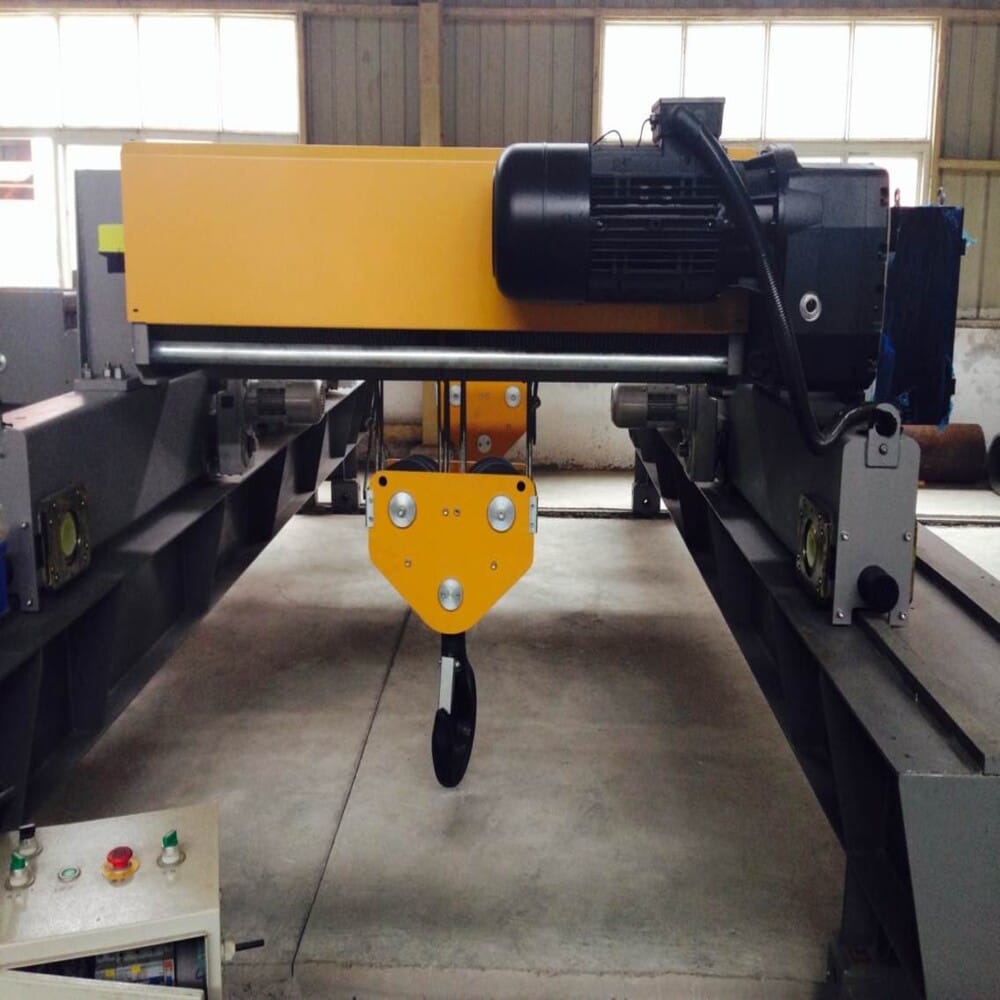
Figure 1: Modular European-standard low-headroom wire rope hoist ready for bridge crane integration at KCICRANES.
2. Comprehensive Engineering Comparison: European Hoist vs. CD/MD Hoist
To help procurement teams and plant engineers evaluate both configurations, the following matrix compares the crucial mechanical, electrical, and dimensional parameters:
| Engineering Parameter | European Standard Wire Rope Hoist | Traditional CD1 / MD1 Hoist |
|---|---|---|
| Structural Architecture | C-Type Parallel / Compact Integrated Layout (Low Headroom) | Coaxial Long Cylindrical Layout (Standard Headroom) |
| Effective Headroom ($H$) | Saves 200mm – 500mm of vertical height → maximum hook lift | Large vertical drop → hook hangs significantly below girder |
| Drive Motor & Gearing | Three-in-one geared motor (Hardened helical gears, DIN Class 6 precision) | Conical rotor motor + external spur reduction box |
| Braking Mechanism & Lifespan | DC electromagnetic disc brake (> 1,000,000 cycles, auto-wear compensation) | Mechanical conical axial brake spring (requires frequent manual adjustment) |
| Speed Control & Inverter (VFD) | Variable frequency drive (VFD) standard → zero load sway, soft start/stop | Direct on-line (DOL) single speed or dual pole-changing motor (abrupt starts) |
| Mechanism Working Class | FEM 2m / 3m • ISO M5 / M6 • Duty factor 40%–60% ED | FEM 1Am • ISO M3 / M4 • Duty factor 25% ED |
| Operating Noise Level | < 70 dB(A) (Whisper-quiet helical gear oil bath) | 82 – 88 dB(A) (Higher mechanical grinding noise) |
| Capital Cost & LCC | Higher initial cost, but lowest 10-year total cost of ownership | Lowest initial purchase price; higher ongoing maintenance |
Figure 2: Close-up of European wire rope hoist highlighting the C-type low-headroom monorail trolley configuration.
3. Kinematic & Dimensional Superiority of European Low-Headroom Design
1. How European Hoists Recapture Building Height
In traditional CD/MD hoists, the cylindrical drum, reduction gearbox, and motor are arranged in a long single line. To balance this heavy cylinder on a single girder’s bottom flange, the hoist body must hang well below the runway beam.
In contrast, a European low-headroom electric hoist utilizes a C-shaped modular profile. The large-diameter rope drum sits adjacent to the girder, placing the hoist body level with the beam. This eliminates wasted dead space, raising the highest hook position by 200mm to 500mm.
Building Investment Savings Calculation:
For a new 10,000 m2 manufacturing plant, gaining 400mm of effective lift height with European low-headroom hoists allows structural architects to reduce the entire building’s wall height by 400mm. This reduces structural steel column weight, cladding area, and HVAC volume, saving tens of thousands of dollars in facility construction costs.
2. Large-Diameter Drum & Wire Rope Lifespan
European hoists feature a significantly larger drum diameter ($D/d \ge 20 \sim 24$) with compact helical grooves. This larger bend radius reduces bending fatigue on the high-tensile galvanized wire rope ($2160\text{ N/mm}^2$), extending wire rope service life by over 300% compared to traditional CD/MD small-drum systems ($D/d \le 16$).
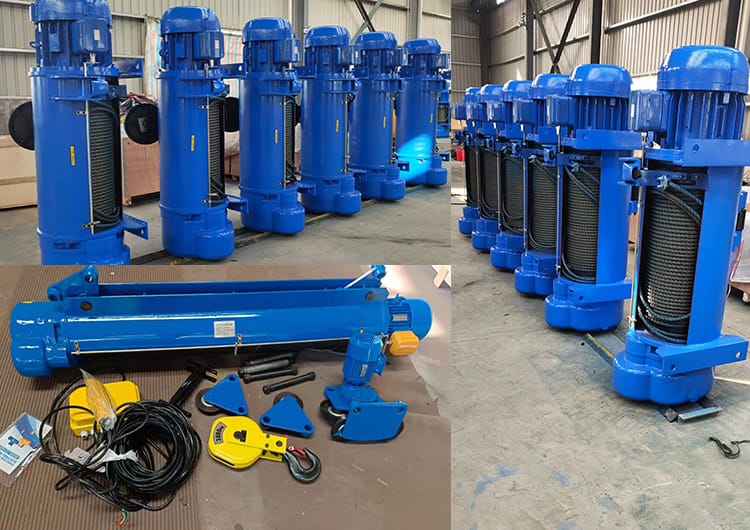
Figure 3: Traditional CD1/MD1 wire rope hoists lined in workshop—cost-effective for intermittent maintenance lifts.
4. Electric Chain Hoist vs. Electric Wire Rope Hoist
Another frequent technical trade-off occurs in the 0.5-ton to 5-ton lifting segment: Should you choose an electric chain hoist or a wire rope hoist?
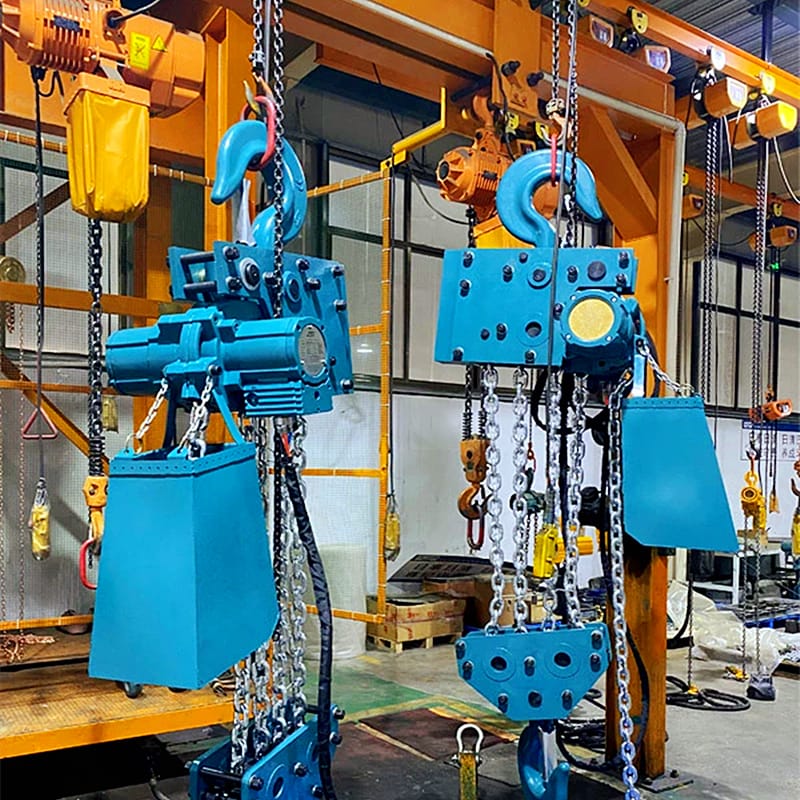
Figure 4: Heavy-duty electric chain hoist with motorized trolley, ideal for workstation and jib crane material staging.
- Choose Electric Chain Hoists When: Capacities are ≤ 5 tons, hook lift height is high (> 12m without drum spooling limits), loads require true vertical lift without lateral hook drift, or space is tight on workstation jib cranes and KBK modular tracks.
- Choose Wire Rope Hoists When: Capacities are 5 tons to 100+ tons, high lifting speeds are needed (> 8 m/min), or high duty-cycle production staging requires continuous thermal dissipation.
5. Decision Checklist: Which Hoist Fits Your Operation?
Procurement Selection Guide:
- Choose Traditional CD1 / MD1 Hoists if:
- Initial budget is the primary constraint.
- The crane operates intermittently (≤ 1–2 hours/day for equipment maintenance).
- Building headroom is ample and vertical lift clearance is not an issue.
- Choose European Low-Headroom Hoists if:
- Building roof clearance is tight and maximum hook height is critical.
- Handling fragile, high-value, or molten loads requiring smooth VFD stepless positioning.
- Running continuous production shifts (ISO M5/M6 duty, 8–16 hours/day).
- Low workplace noise (< 70 dB) and low maintenance downtime are required.
6. Why Global Facilities Trust KCICRANES Hoisting Systems
Based in Xinxiang, Henan, KCICRANES manufactures a complete spectrum of certified electric wire rope hoists, European-type low-headroom crab trolleys, and explosion-proof hoists:
- Schneider & ABB Inverter Controls: Integrated variable frequency drives on cross-travel and hoisting prevent load swinging.
- Hardened Helical Gearboxes (HRC 58–62): Precision CNC-ground gear sets sealed in synthetic oil baths eliminate gear oil leaks.
- Dual-Speed Safety Limiters: Overload limiters, rotary geared upper/lower hook limit switches, and thermal motor protection standard on all European models.
- Seamless Integration with Complete Crane Kits: Our hoists mate directly with KCICRANES end carriages and forged 42CrMo crane wheels.
7. Frequently Asked Questions (FAQ)
Q1: Can I replace an old CD/MD hoist on my existing crane with a European hoist?
A: Yes! European low-headroom hoists can be installed on existing standard $I$-beams or box-girder bottom flanges. Upgrading to a European hoist immediately increases your hook lift clearance by 200mm to 500mm without replacing the main bridge beam.
Q2: What is the maintenance difference between the two brake designs?
A: Traditional CD/MD conical motors rely on an axial mechanical spring brake that must be manually adjusted every few months as the brake ring wears down. European hoists feature DC electromagnetic disc brakes with automatic wear compensation, designed for over 1,000,000 maintenance-free braking cycles.
Q3: Are European hoists explosion-proof certified?
A: Yes, KCICRANES manufactures specialized explosion-proof European wire rope hoists rated for Ex d IIB T4 and Ex d IIC T4 environments (chemical plants, oil refineries, and pharmaceutical manufacturing).
Upgrade Your Hoisting Efficiency with KCICRANES
Contact our lifting engineers today for technical catalogs, CAD dimensional drawings, and competitive direct factory pricing on single and double-girder hoists (0.5t to 100t).