
Engineering Executive Summary: Choosing between a single girder and a double girder overhead crane is one of the most critical structural and financial decisions in facility planning. As a practical benchmark, single girder bridge cranes are the optimal, cost-effective choice for capacities up to 20 tons and spans under 22.5 meters in standard duty cycles (ISO M3–M5 / CMAA Class C). Conversely, double girder bridge cranes become mandatory when lifting exceeds 20 tons, spans exceed 30 meters, maximum hook height is required, or operations involve continuous heavy production (ISO M6–M8 / CMAA Class D–F, such as foundries and steel mills).
1. Introduction: The Core Structural Dilemma
When outfitting a new industrial bay or upgrading an existing workshop, plant managers frequently face a key question: “Can we get away with a single girder crane, or do our operational demands truly require a double girder system?”
The decision extends far beyond the price tag of the crane itself. It dictates the structural sizing of your building columns, runway runway beam profiles ($I$-beam or welded box), total electrical consumption, and the maximum hook approach to your side walls. An underspecified crane leads to premature fatigue and maintenance bottlenecks; an overspecified crane incurs unnecessary building reinforcement costs.
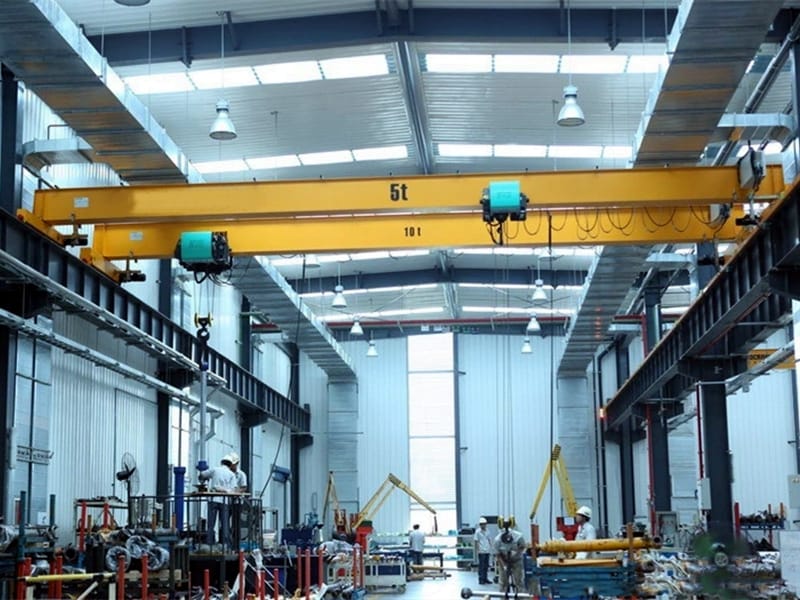
Figure 1: Standard single girder overhead crane utilizing an underhung electric hoist in an assembly bay.
2. Comprehensive Comparison Matrix: Single vs. Double Girder
To evaluate both systems at a glance, our engineering department has synthesized the primary technical and economic metrics based on hundreds of completed manufacturing and mining installations:
| Key Technical Metric | Single Girder Crane (LDA / HD European) | Double Girder Crane (LH / QD Heavy Duty) |
|---|---|---|
| Standard Capacity Range | 1 ton – 20 tons (Most common: 3t, 5t, 10t, 16t) | 5 tons – 100+ tons (Up to 500t custom) |
| Economical Span Length | 7.5m – 22.5m (Max practical ~31.5m) | 10.5m – 35m+ (Can exceed 40m) |
| Hoist Mounting Position | Underhung (trolley travels on the bottom flange of main beam) | Top-running (trolley rides on top of rails mounted to twin girders) |
| Usable Hook Height (Lift) | Moderate (hoist body hangs below the main girder) | Maximum (hook can lift between the two girders) |
| Dead Weight & Wheel Load | Low dead weight → smaller building columns and runways | Heavier dead weight → requires reinforced building runway |
| Service Duty Classification | ISO M3–M5 / FEM 1Am–2m / CMAA Class A–C | ISO M5–M8 / FEM 2m–5m / CMAA Class D–F |
| Maintenance Access | Requires scissor lift or ladder from ground | Full continuous full-length walkway & handrails available |
| Relative Equipment Cost | Baseline (1.0x – Economical) | 1.35x – 1.85x (Higher initial capital investment) |
3. Deep-Dive: When to Choose a Single Girder Overhead Crane
A single girder bridge crane consists of a single bridge beam supported on each side by an end truck. The lifting mechanism—typically a wire rope hoist or electric chain hoist—is suspended underneath the bottom flange of the main girder.
Key Advantages:
- Substantially Lower Capital Cost: Less steel tonnage and simplified fabrication reduce both initial purchase price and shipping freight.
- Reduced Building Structural Demands: Lower dead weight generates significantly lower maximum wheel load ($P_{max}$). If you are building a new pre-engineered metal building (PEMB), specifying a single girder crane can reduce steel foundation and column sizing costs by 15% to 25%.
- Low Headroom Hoist Versatility: Pairing a single girder crane with a modern European-style low-headroom electric wire rope hoist recaptures much of the hook height traditionally lost to underhung designs.
Typical Best Applications:
Light to medium manufacturing, CNC machining workshops, injection molding plants, automotive parts assembly, and warehouse loading docks.
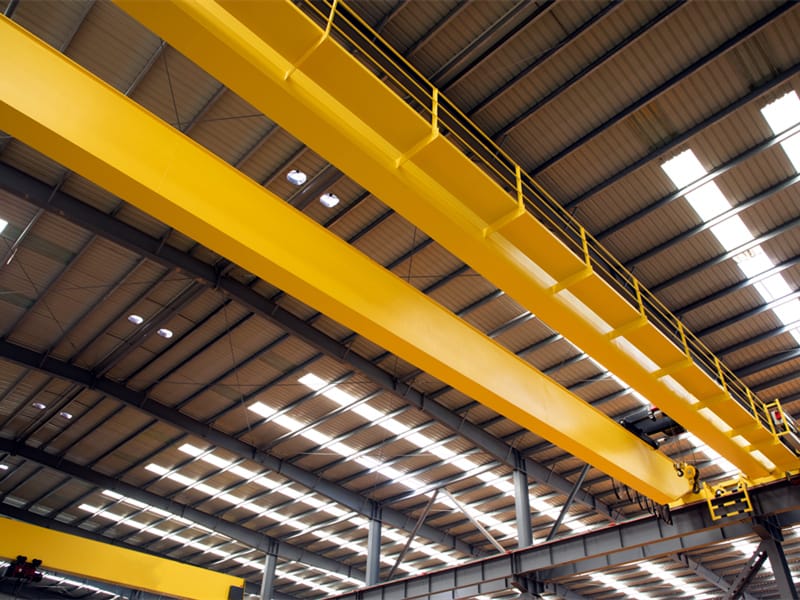
Figure 2: KCICRANES LH-type double girder crane equipped with a European low-headroom hoist trolley.
4. Deep-Dive: When to Choose a Double Girder Overhead Crane
A double girder crane utilizes two parallel bridge girders with a top-running crab trolley traveling on rails mounted to the top of each girder.
Key Advantages:
- Superior Hook Height (Maximum Lifting Elevation): Because the hoist trolley rides on top of the bridge beams rather than underneath, the hook draws up between the two girders. This yields an extra 0.8m to 1.8m of hook clearance—invaluable in existing buildings with limited roof clearance.
- Heavy Capacities and Extreme Spans: Box-girder twin beam construction provides exceptional torsional rigidity and lateral deflection resistance ($L/800 \sim L/1000$), easily handling 30t, 50t, or 100t+ loads across spans over 30 meters.
- Full Walkway and Maintenance Platforms: Double girder cranes accommodate full-span catwalks, service platforms, and handrails, allowing maintenance personnel to safely inspect gearboxes, crane wire rope drums, and electrical cabinets without occupying ground space.
- Severe Duty Cycles (A6–A8): Built for continuous, high-speed multi-shift operations, metallurgy foundry duty, magnet lifting, and grab bucket handling.

Figure 3: Heavy-duty QD series double girder overhead crane built for continuous foundry and steel handling duty.
5. Engineering Selection Checklist: 5 Practical Questions
Before finalizing your inquiry or tender specifications, walk through this 5-point engineering checklist:
Practical Decision Checklist:
- Rated Load & Utilization: Is your maximum lift ≤ 16 tons with infrequent 20t peaks? → Single girder is usually sufficient. Exceeding 20 tons? → Double girder recommended.
- Building Clear Height to Roof Truss: Is roof clearance tight, but you need to load high trailers or stack tall containers? → Double girder top-running trolley gives you maximum hook elevation.
- Daily Shifts & Operating Cycles: Does the crane run 1–2 shifts per day in standard staging? → ISO M4/M5 Single Girder. Continuous 24/7 heavy production? → ISO M6–M8 Double Girder with open winch trolley.
- Runway Column Capacity: Can your existing building support higher wheel loads ($P_{max}$)? → If runway capacity is limited, single girder saves expensive building retrofits.
- Special Auxiliary Attachments: Do you require motorized rotating hooks, dual independent hoists, cabin control with air conditioning, or grab buckets? → Double girder provides the necessary structural platform.
6. Why Partner with KCICRANES for Your Lifting Infrastructure
Based in Xinxiang, Henan—the epicenter of crane manufacturing in China—KCICRANES manufactures bespoke single and double girder bridge cranes engineered to ISO 9001, CE, and FEM standards.

Figure 4: KCICRANES modular end carriages with forged 42CrMo wheels and hardened helical gear motors.
- Optimized Beam Structural Profiles: Automatic submerged-arc welding with full ultrasonic weld inspection ensures minimum deflection ($1/800 \sim 1/1000$).
- Premium Forged Crane Wheels: 42CrMo forged and heat-treated wheel assemblies mounted in modular DRS bearing blocks prevent rail gnawing.
- Turnkey Export Packaging: Segmented main beam designs for 40ft High Cube (HQ) container shipping, drastically lowering ocean freight costs for international buyers.
- Complete Crane Kits Available: We provide full CKD (Completely Knocked Down) crane kits (end carriages, hoists, electrics, festoon systems) for local fabricators who prefer to weld main girders locally.
7. Frequently Asked Questions (FAQ)
Q1: Can a single girder crane lift 20 tons?
A: Yes, single girder overhead cranes can be engineered for up to 20 tons with specialized European low-headroom wire rope hoists. However, for spans exceeding 22.5 meters at 20t capacity, a double girder crane is generally more structurally efficient and cost-effective.
Q2: What is the average price difference between single and double girder cranes?
A: For identical capacity (e.g., 10 tons) and span (18m), a double girder crane typically costs 35% to 50% more for the crane machine itself, plus potentially higher building runway steel costs due to the heavier dead weight.
Q3: How do hook approaches differ between the two designs?
A: Double girder cranes with top-running trolleys generally provide tighter end-approach dimensions (the hook can get closer to the runway rails on both sides of the building), maximizing the usable floor space across the width of the bay.
Get a Tailored Overhead Crane Layout & Quotation
Send our engineering team your building dimensions (bay width, runway height, capacity requirement), and we will provide full CAD drawings, wheel load calculations, and factory-direct pricing within 24 hours.